
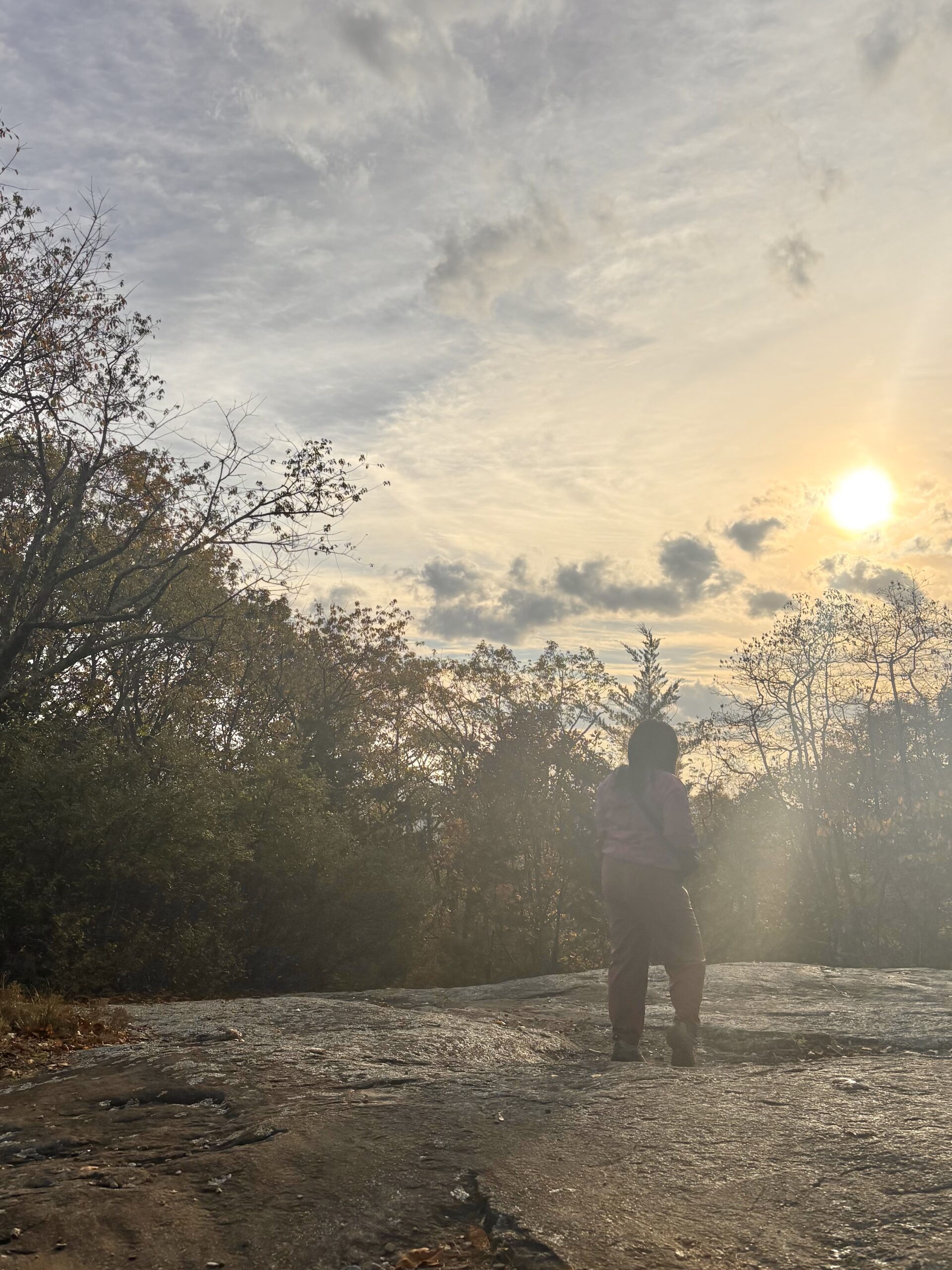
I’ve talked about how to travel with a chronic illness before here, how chronic illness changes you, and now I want to talk about ways to how to hike with one. I think people who have recently been diagnosed with one may feel they are limited to doing activities because of how their body reacts, with whatever the illness is.
However, there are definitely ways on how to stay safe in hiking, whether it’s solo or with someone else. After all, hiking is one of the funnest activities there is to do in the outdoors, and it should not limit anyone. The outdoors is scary sure, with many scenarios that can play out, but it does not discriminate, and there are so many ways to enjoy hiking with peace and safety, as long as you plan efficiently and smartly.
I’ve been solo hiking for over 7 years, and many of these years were from having had a chronic illness. I do recall the days too before my chronic illness and playing out in the outdoors, but with chronic illness: you learn to manage your new normal.
Study the trail before if possible.
This means researching the conditions of that trail and looking at a map (AllTrails provides a variety of digital maps from satellite to terrain to topographic), and reading recent reviews from people. You can also look for previews of the trails via YouTube videos or other blog posts. From thereon, you can make a calculated decision if you can tackle on the trail with your chronic illness.
You should also be noting what the weather conditions will be that day, and if that would affect your chronic illness, as extreme cold or extreme heat can be a trigger.
Always let someone know where your where abouts are.
I have a list of people that have my shared location (indefinitely), but I also like to tell at least someone where I am hiking with coordinates, usually my mom. This is always the most important practice to do before a hike, chronically ill or not. You can also give that person an estimated time of when you plan to return from the hike and to go home, as well as let them know of the hike details like the trail name, the distance and elevation, and the conditions of the day.
Write down somewhere in your hiking backpack what your medical condition is and any instructions to help you.
This is great, and in fact, it may sound similar to the CPR and First Aid certification program you may have learned from. This applies to anywhere, but make a note card that lists your medical condition and any instructions in case of a flare-up OR you run into an emergency. An example of this would be like, if you have asthma, you would write that, and then write down for emergencies, the medication should be the albuterol inhaler, and instructions on how to use it.
Always carry your medications and anything else that can assist you in case of flare-ups.
Also another thing that can apply to anywhere. Take that pill box with you and take anything else you think that can help. For example, with my conditions, I tend to get dehydrated quicker and run into fatigue and muscle pains, so I like to take electrolyte packets with me.
This might also mean you need to bring more water than usual if you feel your condition would leave your body dehydrated or dizzy or cramped up easier. Maybe also taking trekking poles would be easier for you and your joints. Make sure you have comfortable, suitable hiking shoes or boots that can help your feet and joints.
Don’t forget your emergency gear.
This applies to anyone too, but don’t forget your SOS device (I recommend a personal beacon locator and to place that in the front of your backpack so it is easy to reach), a bear spray, an emergency blanket, a pocket knife, a torniquet, first aid kit, and anything else you can think of that can prepare you for all types of scenarios.
Always allow your body to rest when it needs to and in smart, safe spots. Listen to your body and trust it.
Don’t think of your hikes as a “marathon race” ever, especially if you’re not training for anything. Listen to what your body tells you, especially if it is asking you to take it slow and to take a break for a little. Remember to stop and breathe; take those deep breaths and exhale.
Go to spots of the trail that are deemed safe and smart, such as not being by narrow pathways that seem to be next to a cliff or have slippery or loose terrain. If the sun is out, see if you can find a spot with shade to hang out at underneath.

If it means ending a hike earlier, do it.
Trusting and listening to your body means if it’s time to end the hike earlier, please do so. I think people can get caught up with wanting to finish a hike or going the extra mile when their body were already showing signs of exhaustion and on the verge of a flare-up.
You should also note down some early exits you can do, if there are any on the trails. Never make shortcuts without that area being an official trail that links back to the trailhead.
Listening to what your body needs can save you from situations that can get worst, so please just end it and walk back to the trailhead so you can go home safely and comfortable. Don’t let ego take over, and try again another day. I’ve done this multiple times, and I never think about wishing I should’ve kept going when I knew my body was exhausted. There’s another day for anything you do not finish, or it could just mean redirecting your next hiking goal.

Tell me what you thought below!